Genres:
Sold by Booksmandala NepalNo item left in stock!
Get Estimated Arrival Time
Synopsis
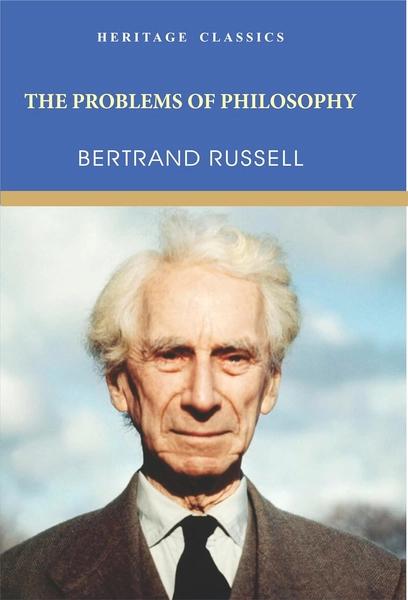
The Problems of Philosophy by Bertrand Russell was first published in 1912. In this book, the author attempts to create a brief and accessible guide to the problems of philosophy. He introduces philosophy as a repeating series of (failed) attempts to answer the same questions: Can we prove that there is an external world? Can we prove cause and effect? Can we validate any of our generalizations? Can we objectively justify morality? He goes on to assert that philosophy cannot answer any of these questions and that any value of philosophy must lie elsewhere than in offering answers to these questions.
Bertrand Arthur William Russell, 3rd Earl Russell, OM, FRS (1872-1970) was a British mathematician, philosopher, logician, and public intellectual. He had a considerable influence on mathematics, logic, set theory, linguistics, artificial intelligence, cognitive science, computer science and various areas of analytic philosophy, especially philosophy of mathematics, philosophy of language, epistemology, and metaphysics. He was one of the early 20th century's most prominent logicians, and one of the founders of analytic philosophy. In 1950, Russell was awarded the Nobel Prize in Literature "in recognition of his varied and significant writings in which he champions humanitarian ideals and freedom of thought
Other info
Page Count
129 Pages
Weight
150g
ISBN
9788170265825
Language
English
Ratings & Reviews(0)


AdvertisementAds