Genres:
Sold by Booksmandala NepalNo item left in stock!
Get Estimated Arrival Time
Synopsis
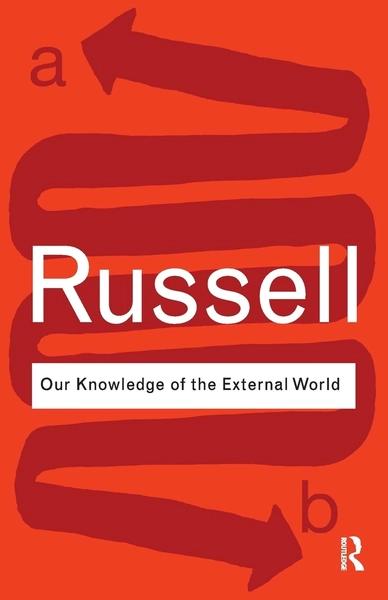
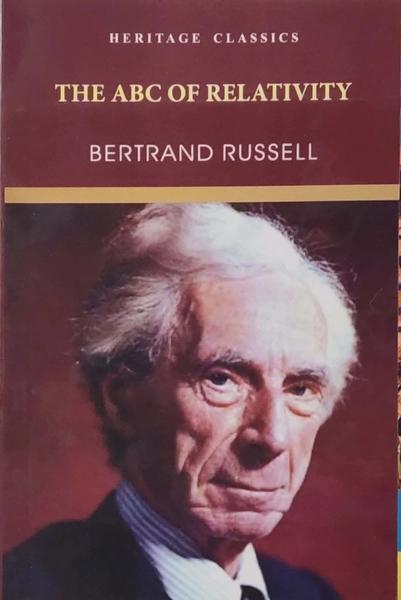
The ABC of Relativity is the most brilliant work of Bertrand Russell. With marvelous lucidity he steers the reader who has no knowledge of math's or physics through the subtleties of Einstein's thinking. In easy, assimilable steps, he explains the theories of special and general relativity. He goes on to describe the practical application of special and general relativity, discoveries about gravitation and the invention of the hydrogen bomb.
Bertrand Arthur William Russell, 3rd Earl Russell, OM, FRS (1872-1970) was a British mathematician, philosopher, logician, and public intellectual. He had a considerable influence on mathematics, logic, set theory, linguistics, artificial intelligence, cognitive science, computer science and various areas of analytic philosophy, especially philosophy of mathematics, philosophy of language, epistemology, and metaphysics. He was one of the early 20th century's most prominent logicians, and one of the founders of analytic philosophy. In 1950, Russell was awarded the Nobel Prize in Literature "in recognition of his varied and significant writings in which he champions humanitarian ideals and freedom of thought".
Other info
Page Count
140 Pages
Weight
160g
ISBN
9788170265832
Language
English
Ratings & Reviews(0)


AdvertisementAds