Genres:
Sold by Booksmandala NepalNo item left in stock!
Get Estimated Arrival Time
Synopsis
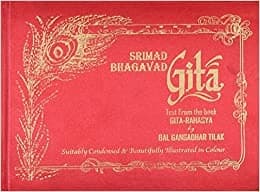
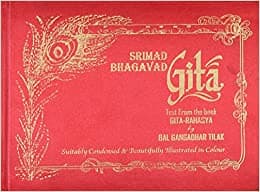
The land of the children of Bharatha watched in quiet, as the familes of Pandu and Dhritarashtra clashed in battle in Kurukshetra for eighteen days. And just before the battle, Arjuna, one of the Pandavas, found himself crippled with fear and doubt, questioning his own values and morale. The Bhagavad Gita contains the words of wisdom of Sri Krishna, the Supreme Personality of Godhead, as he explains that not fulfilling one's Dharma is the greatest sin. The Bhagavad Gita, the Song Divine, is revered as one of the foremost treatises on philosophy and Dharma. In its 700 profound verses, one can find the answer about life, the universe and the reason of why human beings are constantly put through birth and death cycles. Liberation, Krishna explains, is attained by those who uphold Dharma. Arjuna's Dharma was to kill and reinstate his family as the rightful rulers of Hastinapura. Krishna explains that man's repeated failure to uphold his Dharma is why he manifests himself, time and again, to set right the path that humanity strays onto – dharma samsthapanarthaya sambhavami yuge yuge. An inquisitive examination of the ethical and moral struggles of man, the Bhagavad Gita is the sum total of man's greatest duties, and his worst fallacies. This book contains the English translations of texts originally written by Tilak in his book Gits-Rahasya.
About Bal Gangadhar Tilak
Bal Gangadhar Tilak was born on 1st August 1920. He is fondly remembered as Lokmanya, for his composed ways of freedom fighting, journalism, and social reforms. He was one of the foremost leaders of the Indian Independence Movement. He was referred to as the Father of the Indian Unrest by the British authorities. He is famous for his quote Swaraj is my birth right, and I shall have it! He has also written several books, including The Arctic Home in the Vedas, Orion or the Antiquity of the Vedas, and Srimad Bhagavad Gita Rahasya.
Other info
Page Count
144 Pages
Weight
550g
ISBN
b1957
Language
English
Ratings & Reviews(0)


AdvertisementAds