Genres:
Hard Cover
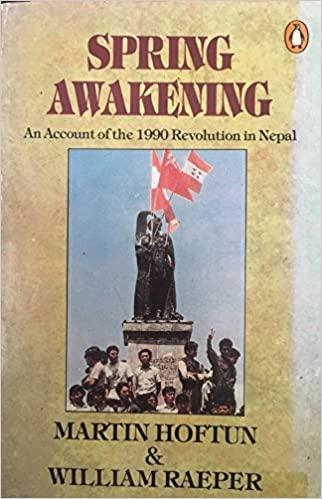
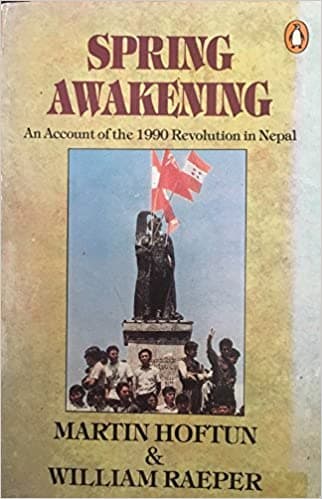
Spring Awakening: An Account Of The 1990 Revolution In Nepal
Rs. 312
Genres:
No item left in stock!
No item left in stock!
Get Estimated Arrival Time
Synopsis
The 1950s represent the beginning of the modern period in Nepal’s history. With the arrival of the first tourists and aid workers, the old isolation was the broken for ever- and the country was open to foreign influences. Nepali culture and politics received a boost in the country and political elite formed where politics previously had announced to little more than the personal whims of the ruler. An announcement of the King Mahendra proclaimed a new democratic constitution and declared that free elections would be held shortly. B. P. Koirala, the leader of the Nepali congress party, became the first elected prime minister of Nepal. Koirala and King Mahendra symbolized the major conflict in Nepali politics during the modern period. King announced the Panchayat constitution on December 1962. This constitution remained in force in Nepal until the revolution of 1990. In Panchayat system, the masses were to rule directly through their local Panchayats ensuring a grassroots democracy (p.9).
A decade later, the political opposition (the Nepali Congress and the United Left Front) declared war on the Panchayat, and the people responded with rapidity to its call for a multi-party system.
Spring Awakening, gives an account of critical transitional phases in recent Nepali politics the Peoples Movement (February-April 1990), the promulgation of the new Constitution (November 1990), and the parliamentary elections (May 1991). The main focus, however, is on the peoples Movement. Analyzing the underlying reasons behind the Movements success, authors Raeper and Hoftun discuss changes brought by the modernization process. Advances in some service sectors — growth in literacy rate, development of communications and mass media, and improved transportation east ward from the Karnali River opened up new horizons.
Authors examine the political situation of the country, there are conflicts between the leaders and the common people were not happy. The people wants reforms of the political system because some certain instability in political institutions. So the people of Nepal seemed to agree that development in Nepal had failed owing to a lack of political rights and freedom. Surya Bahadur Thappa became the Prime Minister to lead a properly elected government within the Panchayat system. The government was downfall. Nepal is a land locked country and the vast majority of its imports come from India or at least has to pass through India.
The 1990 revolution in Nepal lasted only seven weeks from 18 February until 9 April. The major reason was for the struggle for democracy and how it achieved quickly? Author has giving the title of the book Spring Awakening and the sub tile is An Account of the 1990 Revolution in Nepal. Because that time the people were raising their voice for stability of the country. In this movement, Gandhian principles of non-violence played an important role in their political behavior. They had also influenced to some degree by socialism or communism. A great figure of Nepal, Ganesh Manshing campaigned for multy – party democracy in Nepal and in 1990 had emerged as one of the leading lights of the country’s struggle for democracy. Krishna Prasad Bhattarai, he had devoted his life to bringing democracy and freedom to Nepal. He had repeatedly stressed his commitment to a British-style democracy with a constitutional monarch in Nepal after the revolution. The first movement was started in the far-eastern Terai region. It is known as Jhapali movement. It was influenced by Mao’s Cultural Revolution and was linked directly to the Naxalite movement just across the border in north-west Bengal. The Marxist –Leninists soon became one of the largest communist parties in Nepal. Their support was vital to the success of the pro-Democracy movement. Babu Ram Bhattarai was a Brahmin intellectual from Gorkha, he said; ‘We will organize the people and then we will snatch power. Then we will redistribute property and hold free and fair elections and finally we will create a real democracy
Other info
Page Count
242 Pages
Weight
485g
ISBN
b540
Language
English
Ratings & Reviews(0)


AdvertisementAds