Genres:
Limited stock available
Get Estimated Arrival Time
Synopsis
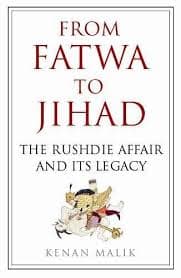
A Finalist for the George Orwell Book Prize
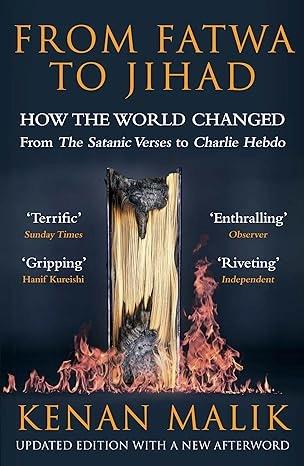
"It would be absurd to think that a book can causeriots," Salman Rushdie asserted just months before the publication of his novel "The Satanic Verses." But that's exactly what eventually happened. In England, protests started justmonths after the book's publication, with Muslim protestors, mainly from immigrant backgrounds, coming by the thousands from the outer suburbs of London and from England's old industrialcenters--places like Bradford, Bolton, and Macclesfield--to denounce Rushdie's novel as blasphemous and to burn it. In February of 1988, the protests spread to Pakistan, where riots broke out, killing five. That same month, Iran's Ayatollah Khomeini called for Rushdie's assassination, and for the killing of anyone involved with the book's publication.
It was this frightening chain of events, Kenan Malik argues in his enlightened personal and political accountof the period, that transformed the relationship between Islam and the West: From then on, Islam was a domestic issue for residents of Europe and the United States, a matter of terror and geopolitics that was no longergeographically constrained to the Middle East and South Asia.
Malik investigates the communities fromwhich the anti-Rushdie activists emerged, showing the subtleties of immigrant life in 1980s England. He depicts the growth of the anti-racist and Asian youth movements, and shows how young Britons went from supportingthese progressive movements to embracing a conservative strain of Islam. Malik also controversially tackles England's peculiar strain of "multiculturalism," arguing that policymakers therefailed to integrate Muslim immigrants, which many politicians saw as incompatible with their own "Western values." It was a perception that led many to appeal to Muslims not as citizens, but as peoplewhose primary loyalty was to their faith and who could be engaged only by their "community leaders." It was a also policy that encouraged Muslims to view themselves as semi-detachedcitizens--and that inevitably played into the hands of radical Islamists.
Twenty yearslater, the questions raised by the Rushdie affair--Islam's relationship to the West, the meaning of multiculturalism, the limits of tolerance in a liberal society--have become the definingissues of our time.
Other info
Page Count
352 Pages
Weight
350g
ISBN
9781786491046
Language
English
Ratings & Reviews(0)


AdvertisementAds