
Remembering Nims Dai
By Books Mandala, August 02, 2026
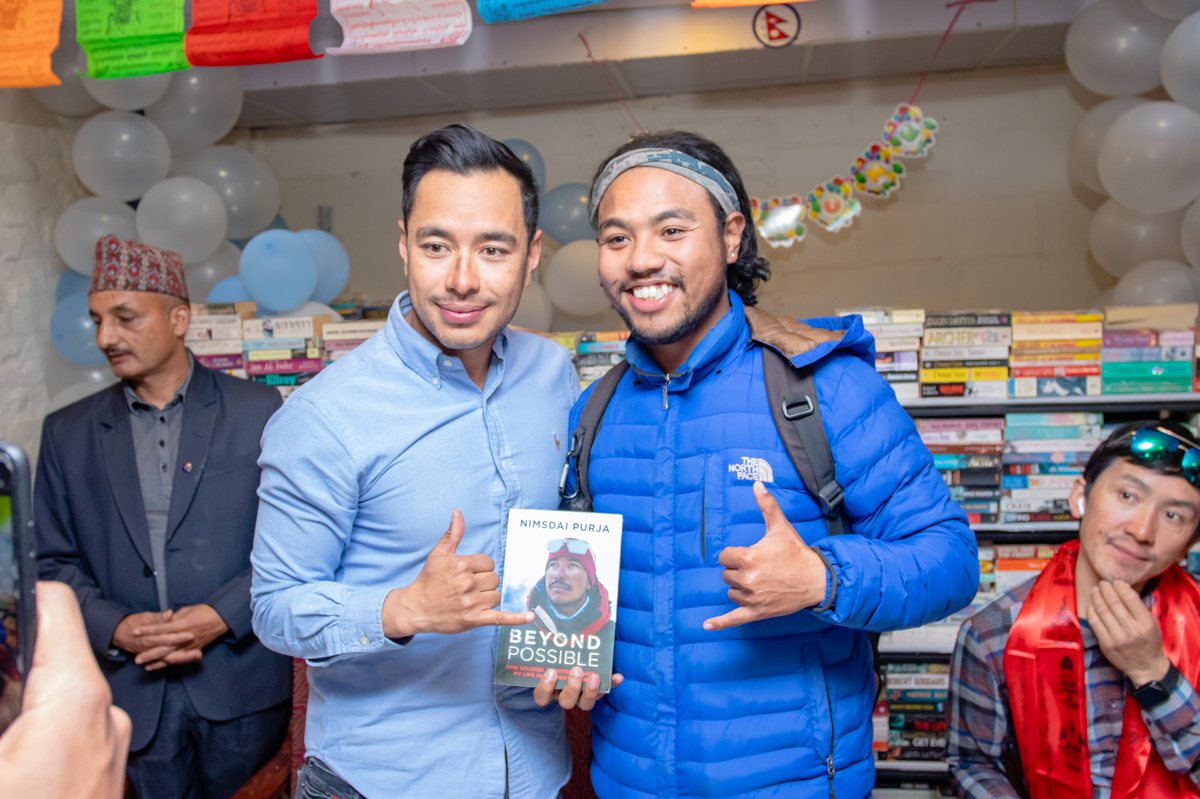
17 February 2021.
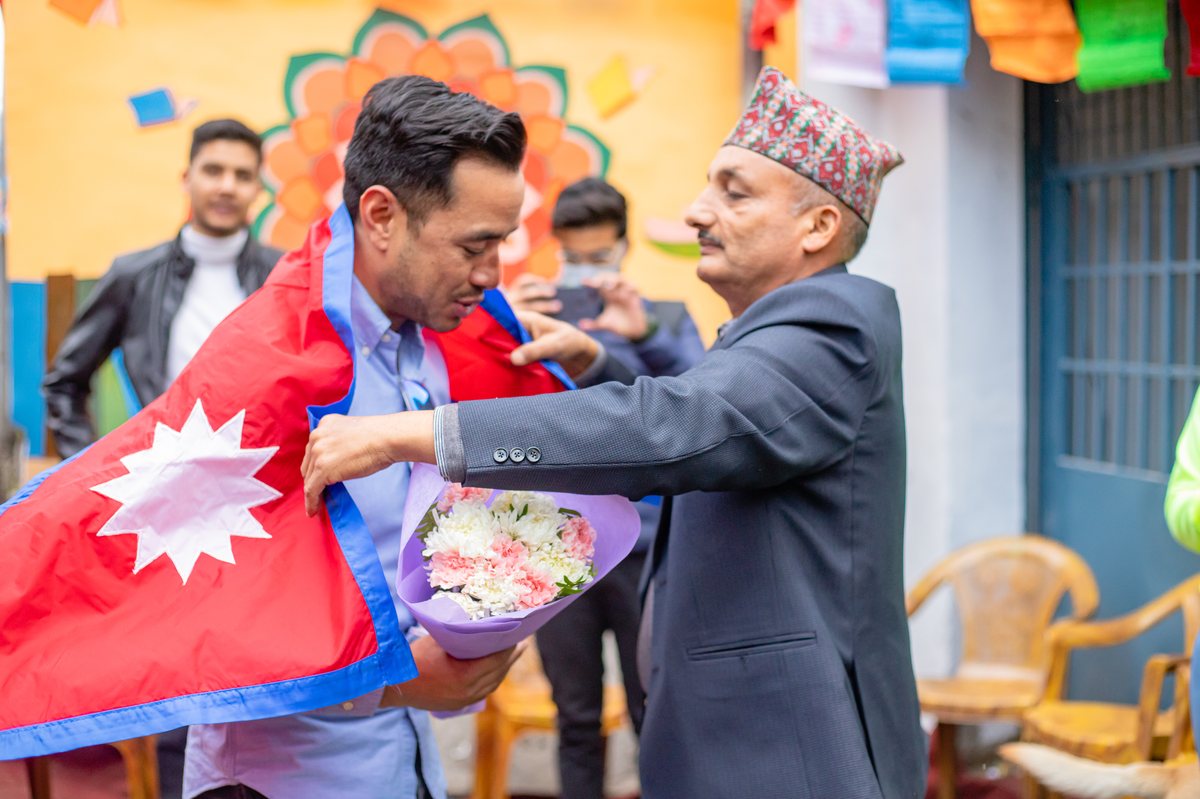
We had just opened Books Mandala in Kathmandu, at Gairidhara and hardly anybody knew we were there.We wanted to mark the opening with something. So we sent Nirmal Purja an invitation, the way you send a message you are certain will never be read.
He had come down from K2 three and a half weeks earlier. The first winter ascent in history, an all-Nepali team, and he had climbed it without supplemental oxygen. Every broadcaster, brand, and government in the world wanted an hour of his time that month. We were a bookshop in Kathmandu asking whether he might come and sign some books on a Wednesday afternoon.
He said yes.
We are not sure we have ever quite got over it. Five years on, the thing we tell people is not that he signed for everyone, or that he asked each person how to spell their name, or that he stayed for a couple of hours, though he did all of that. It is that the invitation reached him at all, and that his answer was simply yes.
On 1 August 2026, the Nimsdai Foundation confirmed that Nirmal "Nimsdai" Purja had passed away in an avalanche on Broad Peak, in Pakistan's Karakoram range. He was 43. Every other member of the ten-person expedition passed away with him.
We met him once. We would like to set down what we saw.
What he had just done
K2 in winter, which nobody in history had managed.
On 16 January 2021, ten Nepali climbers stopped a few metres below the summit of K2 and waited so they could step onto it together, singing the national anthem. K2 is the second highest mountain on earth and the only one of the fourteen eight-thousanders that had never been climbed in winter. Teams had been trying since the 1980s. Purja was the only one of the ten who did it without supplemental oxygen.
For most of the twentieth century, Nepali climbers appeared in accounts of Himalayan mountaineering as a category rather than as named people. They fixed the ropes, carried the loads, and made other people's summits possible. That morning on K2, ten of them stood on top of it together and made sure the photograph said whose achievement it was.
Three and a half weeks later he was in our shop.
What we saw that afternoon
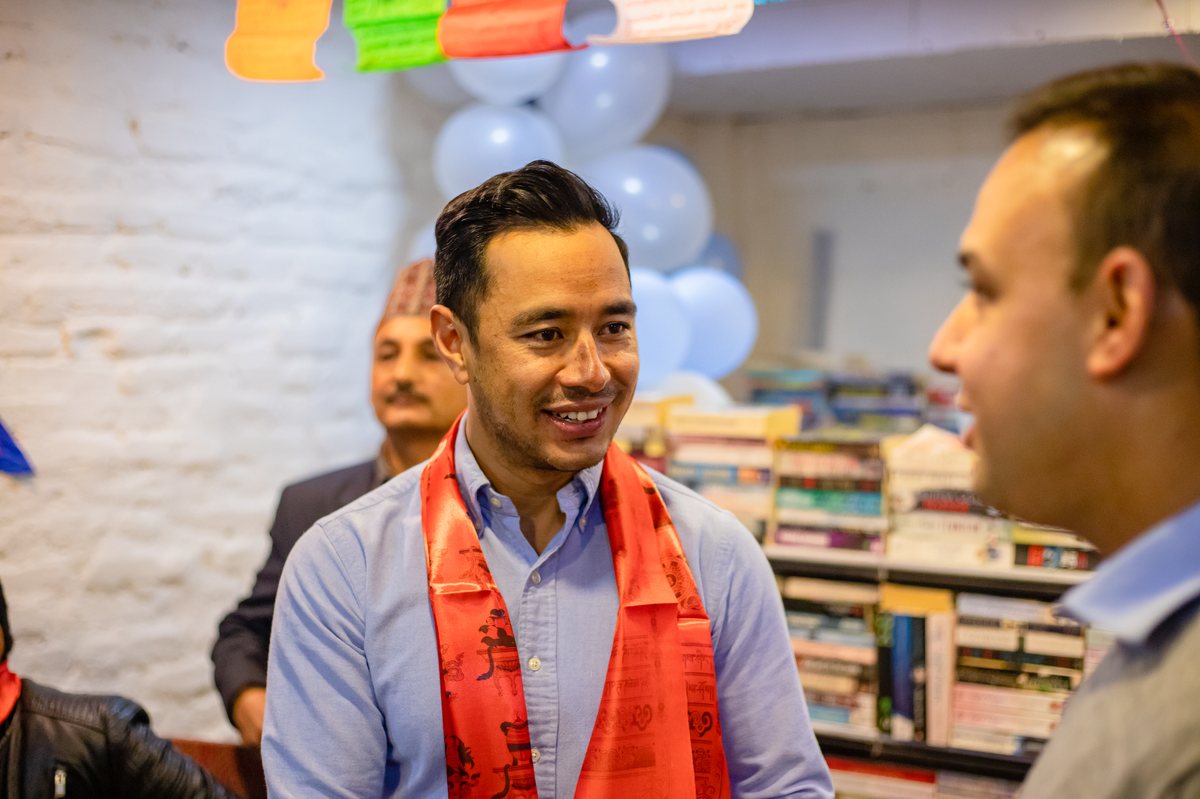
There was no distance between him and the people who came to meet him.
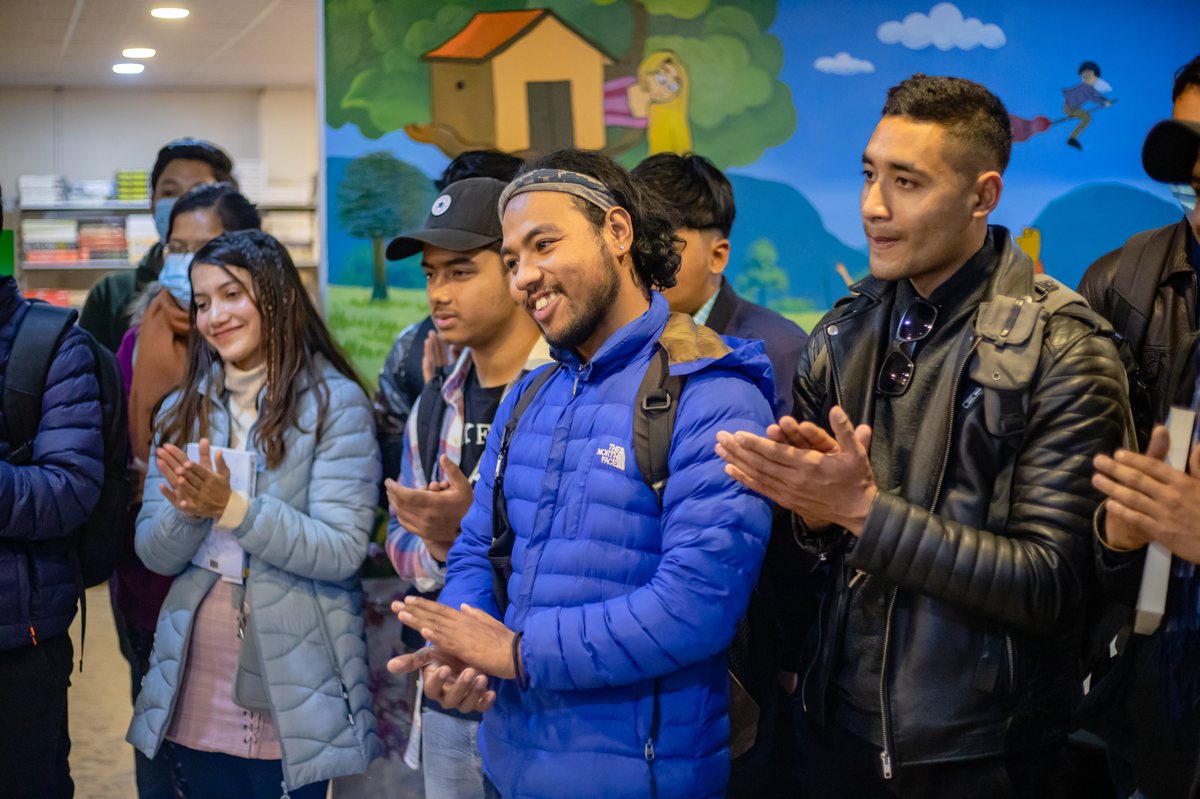
That is the thing we have told people about ever since. He did not set himself up behind a desk with a line filing past. He came down to where the readers were and worked from there, at their level, for as long as it took.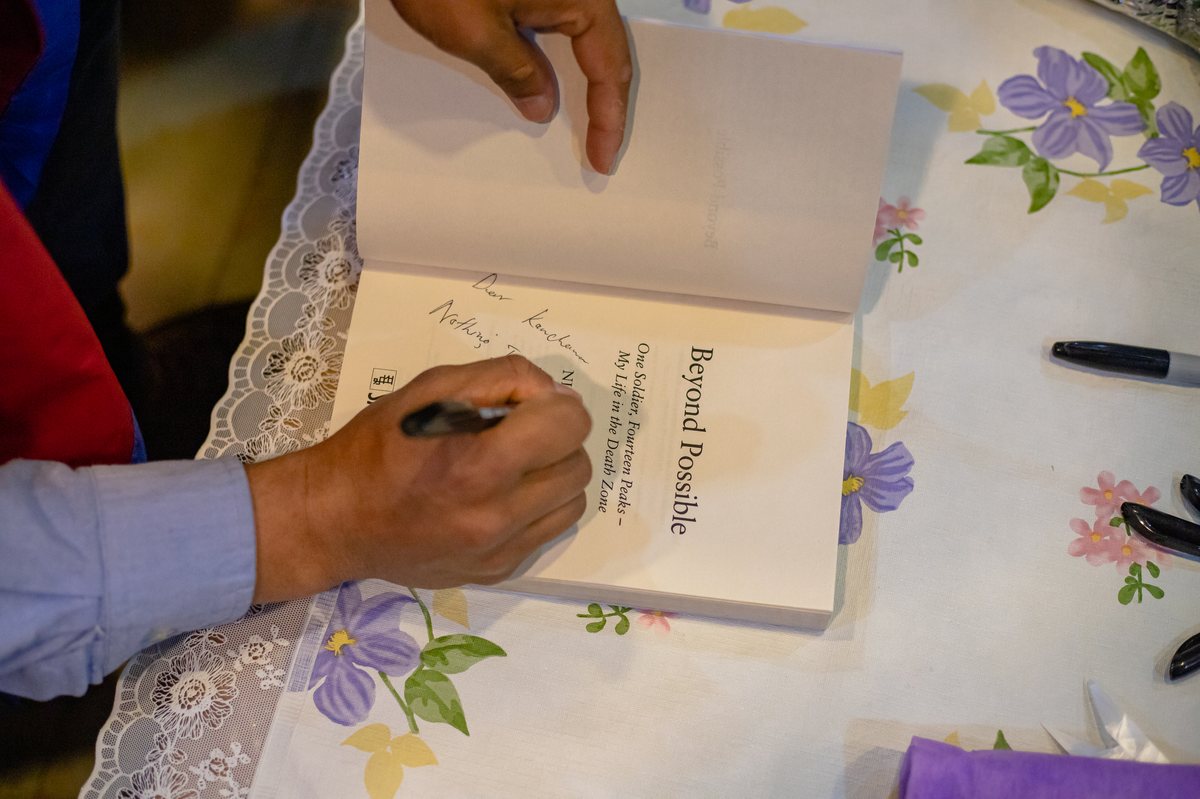
He asked every person their name. Not a signature and a nod, but a name, spelled out and then written by hand into the front of their copy. The queue moved slowly because of it. Nobody minded.
An hour was the plan. He stayed well past it, then stayed longer, interacted and photographed with everyone who asked.
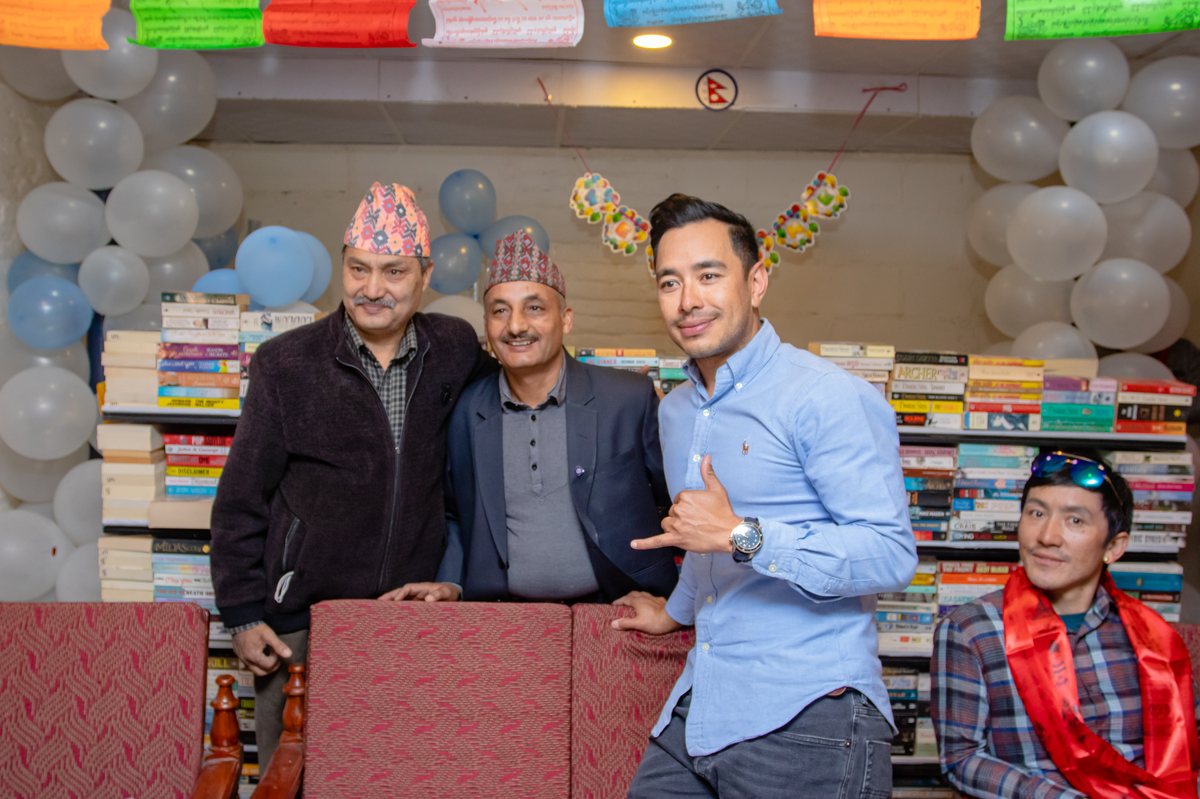
None of that was for a camera crew. There wasn't one. It was a Wednesday afternoon at Books Mandala and he behaved as though it mattered.
What is being said now
The accounts published this week describe the same man.
Purja's own company confirmed the news on 1 August. Their statement mourned "not only Nims, but every life lost", naming his climbing partners and guides Pur Bahadur Gurung, known as Yukta, and Nima Sherpa alongside him.
Prime Minister Balendra Shah wrote that climbing is not only a journey to the top but an expression of "courage, discipline, sacrifice", and that the climbers would remain immortal in history. He described the loss of six Nepali and four international climbers on Broad Peak as a shock to the country.
The others who passed away with him were Kili Pemba Sherpa, Nima Sherpa, Gyalu Sherpa, Nawang Thindu Sherpa, and Pur Bahadur Gurung of Nepal, and four international climbers from Pakistan, China, Oman, and the United States. The bodies were located near Camp I by drone survey on the Saturday morning and identified by a rescue team led by Mingma Gyalje Sherpa and Sirbaz Khan.
He had been attempting Broad Peak without bottled oxygen, part of an effort to summit every eight-thousander a second time without it.
What he changed
There is a generation of Nepali readers who grew up believing the highest places on earth belong to them too.
For most of the twentieth century, Nepali climbers appeared in accounts of Himalayan mountaineering as a category rather than as named people. They fixed the ropes, carried the loads, and made other people's summits possible. In 2019 Purja climbed all fourteen eight-thousanders in six months and six days, against a standing record of nearly eight years, and then led the team that took K2 in winter. He did it loudly, and on purpose, and he made sure the photographs said whose achievement it was. Netflix's 14 Peaks: Nothing Is Impossible carried that story to an audience far beyond mountaineering.
What it did to the ambition of young Nepali readers is not really measurable, but anybody who has worked a bookshop counter in Kathmandu since 2019 has watched it happen.
Beyond Possible has never been a slow seller here. It is bought by trekking guides and by school students, and more often than almost anything else we stock, it is bought twice, once to read and once to give away.
The book is more practical than the slogan attached to it suggests. Much of it concerns remortgaging a house to fund an expedition nobody would sponsor, permits and weather windows, the arithmetic of moving between fourteen mountains in six months, and the rescues he turned back to perform between summit pushes. It reads the way he spoke, directly and without much decoration. It is the book he was signing that afternoon.
What we are holding on to
He was under no obligation to be generous to Books Mandala opening its first store in the capital city.
We only had the one afternoon, and we are aware that is a small thing to set beside what he did on the mountains. But we were not on the mountains. We were in a room in Gairidhara, and what we saw there was a man who had just done something nobody in history had done, learning the names of strangers and staying past the hour he had promised us.
Our thoughts are with his family, with his team, and with the families of every climber lost on Broad Peak.
भावपूर्ण श्रद्धाञ्जली।
Nirmal "Nimsdai" Purja, 1983 to 2026.



Comments (0)